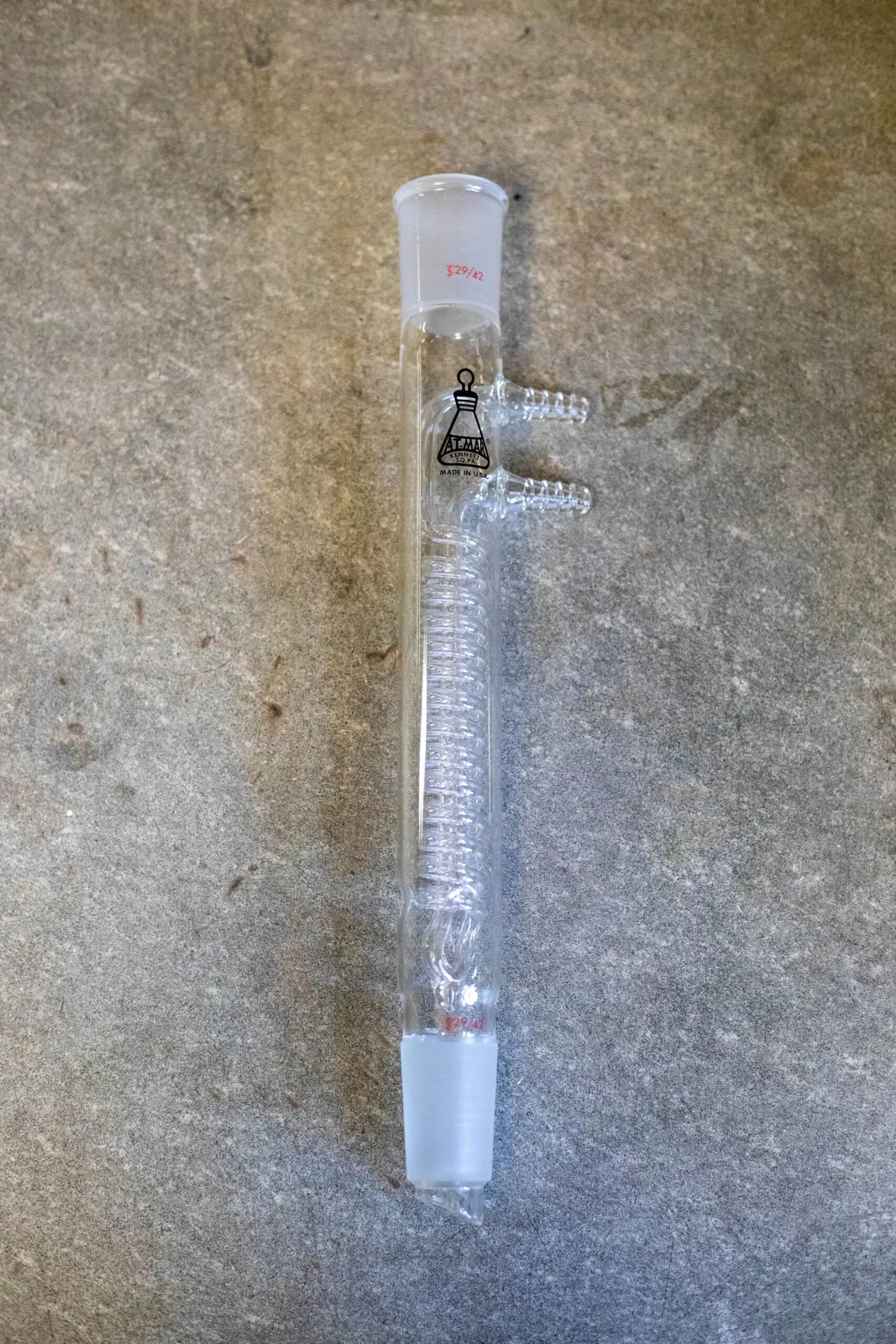
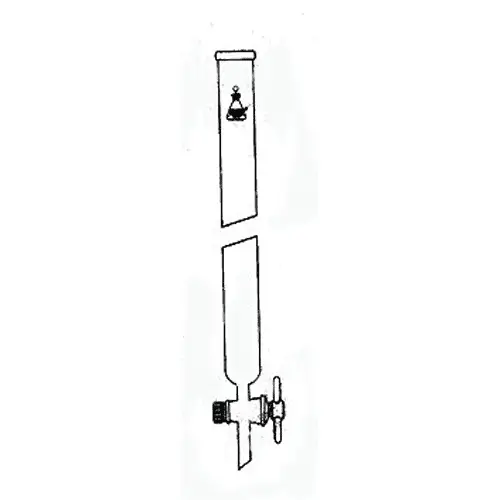
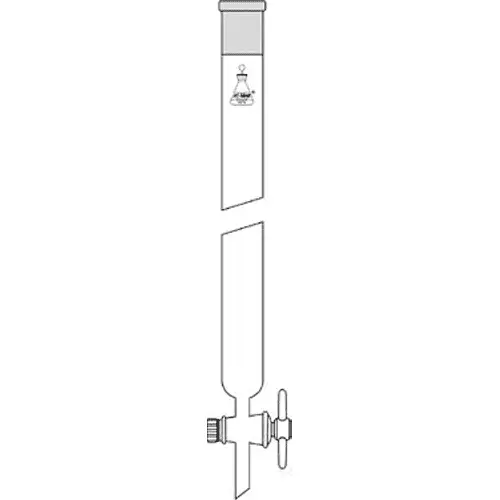
A column that fits your method keeps your attention on the separation process instead of the setup. When chromatography columns arrive a few millimeters off spec, every run turns into a workaround. Fortunately, At-Mar Glass has built borosilicate glass chromatography columns in-house for over 50 years. Each can be sized to the ID, length, and stopcock your work calls for. Order online or contact us to start a custom build.
With plastic and steel columns, you’re trusting what you can’t see. When you’re weighing chromatography columns, glass earns its spot by letting you watch the bed, the bands, and the solvent front as the run unfolds. Pair that with borosilicate’s chemical resistance and a tight stopcock seal, and the column behaves the same run after run.
Most packing problems are visible long before they reach your fractions, as long as the column lets you see the process. Clear borosilicate shows channeling, a cracked bed, or trapped air while you can still repack. It’s also why glass columns for chromatography stay the default, since borosilicate won’t leach into your mobile phase or soften under harsh solvents.
Prepacked cartridges are convenient right up until your method needs a different silica, resin, or bed height. With empty chromatography columns, the stationary phase is your call, so particle size and load follow the separation. Clean it, repack it for the next project, and the same column keeps working for you.
Ever set a flow rate, stepped away, and come back to a completely different drip? A well-fitted PTFE stopcock holds the rate you dial in, with no grease to wash into your fractions. We size the bore to the column’s ID and match frit porosity to your packing, so fines stay in the bed.


Every lab’s setup is a little different, from the hood height to the reservoir that’s been on the shelf for years. That’s why we build columns in several styles, each made to slot into your workflow without improvised fittings. Here’s what we make most often, plus how we handle the jobs that don’t fit what’s typically found in a catalog.
When a crude mixture is waiting, gravity elution can feel painfully slow. Flash chromatography columns let you push solvent through with gentle positive pressure and wrap up a purification in minutes. A fritted disc holds the bed without a cotton plug, and quartz-fritted versions are available when your chemistry needs them.
A new column is only useful if it connects to the glassware already on your bench. Our jointed columns carry a standard-taper or ball-and-socket joint up top, so your reservoir, addition funnel, or flow-control adapter seats without leaks. Ball joints add a bit of give, which helps when your setup isn’t perfectly aligned.
The simplest setup is often the right one for routine gravity work. Our straight columns rely on a clear tube and a PTFE stopcock, which means there are fewer parts to clean and nothing to grease between runs. With dozens of ID and length combinations listed, the size you need is likely already in our shop.
Some methods were written around a column nobody sells anymore, or one that only exists in a sketch. Our glassblowers handle custom glassware from your drawing, an old part, or a list of dimensions, adding side arms, extra joints, or a reservoir bulb. Your method stays as written, and the glass is built to match it.
Preparative chromatography columns have to hold a deeper, wider bed without channeling, move a lot more solvent, and stay sealed through long runs. We build for that scale from the start, so purifying a bigger batch doesn’t mean overloading a column sized for a smaller one.
Splitting a batch across several small columns means more packings, more fractions, and more chances for something to drift. Large scale chromatography columns let you run it once, on a bed big enough for the full load. Wide-bore stock columns are ready to order, and pilot setups can go bigger through our special apparatus work.
Retention times have a way of shifting when the room warms up by mid-afternoon. A jacketed column circulates fluid from your chiller or bath around the bed, holding temperature steady for heat-sensitive compounds and reproducible runs. Sampling ports and other process-specific features can be built in, too.
If you already know the ID, length, and joint you need, this is the quickest way to get a column on your bench. Below are popular stock sizes grouped by style. Don’t see your size? The full column catalog lists nearly a hundred configurations, and anything outside it can be built to order.
| Column ID | Reservoir | Stopcock | Joint | Frit |
|---|---|---|---|---|
| 8 mm ID | 250 ml | 2 mm PTFE | 24/40 | Medium-coarse |
| 9 mm ID | 500 ml | 2 mm PTFE | 24/40 | Coarse |
| 3 mm ID | 500 ml | 2 mm PTFE | 29/42 | Medium |
| 9 mm ID | 1000 ml | 4 mm PTFE | 24/40 | Coarse |
| Column Dimensions | Stopcock | Joint |
|---|---|---|
| 5 × 250 mm | 2 mm PTFE | 29/42 |
| 22 × 300 mm | 2 mm PTFE | 24/40 |
| 22 × 350 mm | 2 mm PTFE | 29/42 |
| Reservoir Capacity | Spherical Joint |
|---|---|
| 100 ml | 35/25 |
| 250 ml | 35/25 |
| 500 ml | 50/30 |
| 1000 ml | 50/30 |
| 1000 ml | 65/40 |
| 2000 ml | 50/30 |
| Column Dimensions | PTFE Stopcock |
|---|---|
| 5 × 150 mm | 2 mm |
| 49 × 300 mm | 4 mm |
| 64 × 450 mm | 4 mm |
| 75 × 600 mm | 6 mm |
| 95 × 450 mm | 6 mm |
Ordering lab glass using a catalog number often means hoping the part that arrives matches the listing. Buying from At-Mar Glass puts you in touch with the people who actually make the column. Fit questions get answered before you order, and if something goes wrong later, the same shop that built it can set it right.
Every column we sell is blown in our Kennett Square shop, so swapping a joint size or stopcock bore takes a conversation, not a special order passed between companies. Our glassblowers also handle modifying glassware your lab already owns.
Because you buy straight from the shop that makes them, our columns come without a distributor’s markup. That’s how we offer affordable chromatography columns for laboratories without cutting corners on wall thickness, stopcocks, or frits.
A chipped drip tip or a frit clogged past cleaning doesn’t have to send a column to the glass waste bin. Our lab glass repair service can fuse a crack, rebuild a tip, or replace a frit, usually for less than a new column costs and turned around in just a weekend.
The questions we hear most about columns tend to come down to fit: will it hold the load, connect to the setup, and stand up to the solvent? Below, we’ve outlined the answers to most of these questions.
Glass columns fall into a few groups: gravity columns with a plain stopcock, flash columns built for positive pressure, and jointed columns connecting to reservoirs or flow-control adapters. Prep work adds wide-bore, jacketed, and matched-set builds. At-Mar Glass makes all of these, in stock sizes or to order.
Steel makes sense for high-pressure HPLC, and plastic cartridges suit single-use convenience. For open-column and flash work, borosilicate holds up to chlorinated solvents and strong acids that can swell or craze plastic, and a glass column cleans up and repacks for years. That longevity usually makes glass the cheaper choice over time.
All of our columns ship empty, so you pack them with the silica, alumina, or resin your separation needs. Fritted versions support the bed on their own, while plain columns take a glass wool or cotton plug. Not sure which frit suits your media? We’ll help you match it before you order.
Stock columns run from roughly 10 mm ID for small flash work up to 95 mm ID for prep scale. Frits come in coarse (40 to 60 microns), medium-coarse (30 to 40), and medium (10 to 15). Need something longer, wider, or finer? Request a custom build.
Yes. Send the column with a note on the problem or change you want, and we’ll look it over before starting. Common jobs include fusing cracks, replacing frits, rebuilding drip tips, swapping stopcocks, and adding or resizing joints. If a repair won’t hold up, we’ll tell you upfront.
The quickest route to the right column is a short call with the glassblowers who will actually build your glassware. Tell us the ID, length, joint, and frit you need, or describe the separation and we’ll size it. Reach out today, and we’ll get stock or custom chromatography columns quoted and shipped right away.