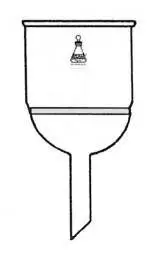
Fritted Funnels

Fritted Funnels for Advanced Laboratory Filtration

When precision filtration is non-negotiable, fritted funnels deliver the controlled porosity and chemical resistance your laboratory demands. At-Mar Glass manufactures high-quality fritted funnels with consistent pore distribution, durable borosilicate construction, and the quick turnarounds your research timeline requires. Standard configurations or custom specifications—we deliver filtration glassware that performs reliably, experiment after experiment.

Fritted Funnel Products

Understanding Fritted Funnel Design and Functionality

The defining feature of any fritted glass funnel is its integrated porous disc—a precisely engineered filtration barrier that separates your target compounds from unwanted particulates without the hassle of paper filters or membrane degradation.

Porous Glass Disc Construction

A glass fritted funnel incorporates a sintered disc manufactured by fusing borosilicate glass particles at controlled temperatures. This process creates thousands of interconnected pores with remarkably uniform distribution throughout the disc, ensuring consistent flow rates and predictable retention characteristics across the entire filtration surface for reproducible results.

The sintering process determines porosity grade—coarse, medium, or fine—by controlling particle size and fusion parameters. Unlike disposable filters that can shed fibers or introduce contaminants, sintered glass provides inert, reusable filtration that maintains its pore structure through repeated thermal and chemical exposure, making it indispensable for quantitative analysis and sensitive pharmaceutical applications.

The frit disc is permanently fused into the funnel body during manufacturing, eliminating leak paths and ensuring structural integrity under vacuum pressure. This seamless construction prevents sample loss at the disc-funnel junction while providing the mechanical strength needed for routine laboratory use, including thermal stress from hot filtrations and repeated cleaning cycles.

Pore architecture directly influences filtration speed and retention capacity. The interconnected pore network creates tortuous pathways that trap particles while allowing liquid to pass efficiently. Larger surface area and appropriate pore size selection maximize throughput without sacrificing selectivity, letting you process volumes quickly while maintaining the separation quality your protocols demand.

Fritted Funnel Types and Configurations

Laboratory filtration demands vary dramatically depending on particle size, solution viscosity, and throughput requirements. Understanding the available configurations ensures you select the right fritted funnel for your specific application.

Porosity Grade Options

Frits are classified by porosity: coarse (40-60 microns) for rapid filtration of larger precipitates, medium (10-15 microns) for general laboratory use, and fine (4-5.5 microns) for retaining small crystals or colloidal particles. Each grade balances flow rate against retention capacity, letting you optimize filtration speed without compromising separation quality for your specific analytical or preparative procedures.

A buchner funnel with fritted disc features a flat, wide disc and cylindrical walls—ideal for vacuum filtration with side-arm flasks. The fritted buchner funnel maximizes filtration surface area for processing larger volumes efficiently. Standard stem-style funnels offer compact designs better suited for gravity filtration or smaller sample volumes where bench space and collection vessel size matter.

Most laboratory fritted glass funnels incorporate standard taper ground glass joints—14/20, 19/22, 24/40, and 29/42 being most common. Joint sizing ensures compatibility with your existing glassware setups while providing leak-free connections under vacuum. Custom joint configurations are available when your experimental apparatus requires non-standard specifications or specialized adapter arrangements for unique procedural requirements.

Funnel capacities range from small 15ml volumes for analytical work to large 600ml models for preparative-scale operations. Disc diameter correlates with capacity, affecting both filtration speed and the volume of precipitate the funnel can accommodate. Selecting appropriate sizing prevents overflow during filtration while maintaining efficient processing speeds for your typical sample volumes and laboratory workflows.

Pore Size Selection and Filtration Applications

Choosing the correct pore size is critical for achieving clean separations without clogging or compromising filtrate purity. Your fritted filter funnel should match both the particle size distribution you’re retaining and the flow characteristics your procedure requires.

Matching Micron Ratings to Your Filtration Needs

Pore size selection starts with understanding your precipitate or particle characteristics. A fritted glass filter funnel with 40-80 micron porosity handles coarse crystalline precipitates and gelatinous materials that would quickly clog finer grades, while 10-15 micron medium porosity suits most routine analytical work where moderate particle retention is needed without excessive pressure requirements.

Fine Porosity for Demanding Applications

Fine frits (4-5.5 microns) excel at retaining small crystals, removing bacterial contamination, or clarifying colloidal suspensions where complete particle removal is essential. These grades require higher vacuum pressure or longer filtration times but deliver the thorough separation pharmaceutical quality control and trace analysis protocols demand, particularly when filtrate clarity directly impacts downstream analytical accuracy.

Specialized Configurations for Scale and Precision

High-volume operations benefit from configurations like a 24/40 heavy wall 600ml buchner funnel w/ 40-80 micron frit, which combines generous capacity with robust construction and coarse porosity for rapid processing. Heavy wall designs withstand repeated thermal cycling and vacuum stress while the large disc area maintains acceptable flow rates even when filtering viscous solutions or high-solids-content slurries.

Material Specifications and Quality Standards

Material quality directly impacts filtration performance, longevity, and chemical compatibility. The glass frit funnel you select should meet rigorous standards for thermal stability, chemical inertness, and mechanical durability.

Borosilicate Glass Construction Benefits

Borosilicate 3.3 glass offers superior thermal shock resistance, withstanding rapid temperature changes from hot filtrations to ice-cold washes without cracking. Its low coefficient of thermal expansion and excellent chemical durability across pH ranges make it the standard for laboratory glassware. This composition resists most acids, bases, and organic solvents, ensuring your filtration apparatus won’t leach contaminants or degrade during aggressive chemical procedures.

Heavy wall construction provides enhanced mechanical strength for vacuum filtration applications and repeated autoclaving cycles. Standard wall funnels offer adequate durability for routine use while reducing weight and cost. Consider heavy wall specifications when your protocols involve high vacuum pressure, thermal extremes, or frequent handling that could stress the glassware beyond typical laboratory conditions.

Borosilicate glass withstands prolonged exposure to most mineral acids, organic solvents, and alkaline solutions without surface etching or structural degradation. Notable exceptions include hydrofluoric acid and hot concentrated phosphoric acid, which require alternative materials. Understanding these limitations ensures you select appropriate filtration equipment that maintains dimensional stability and pore integrity throughout your experimental procedures without compromising sample purity.

At-Mar Glass Manufacturing Capabilities

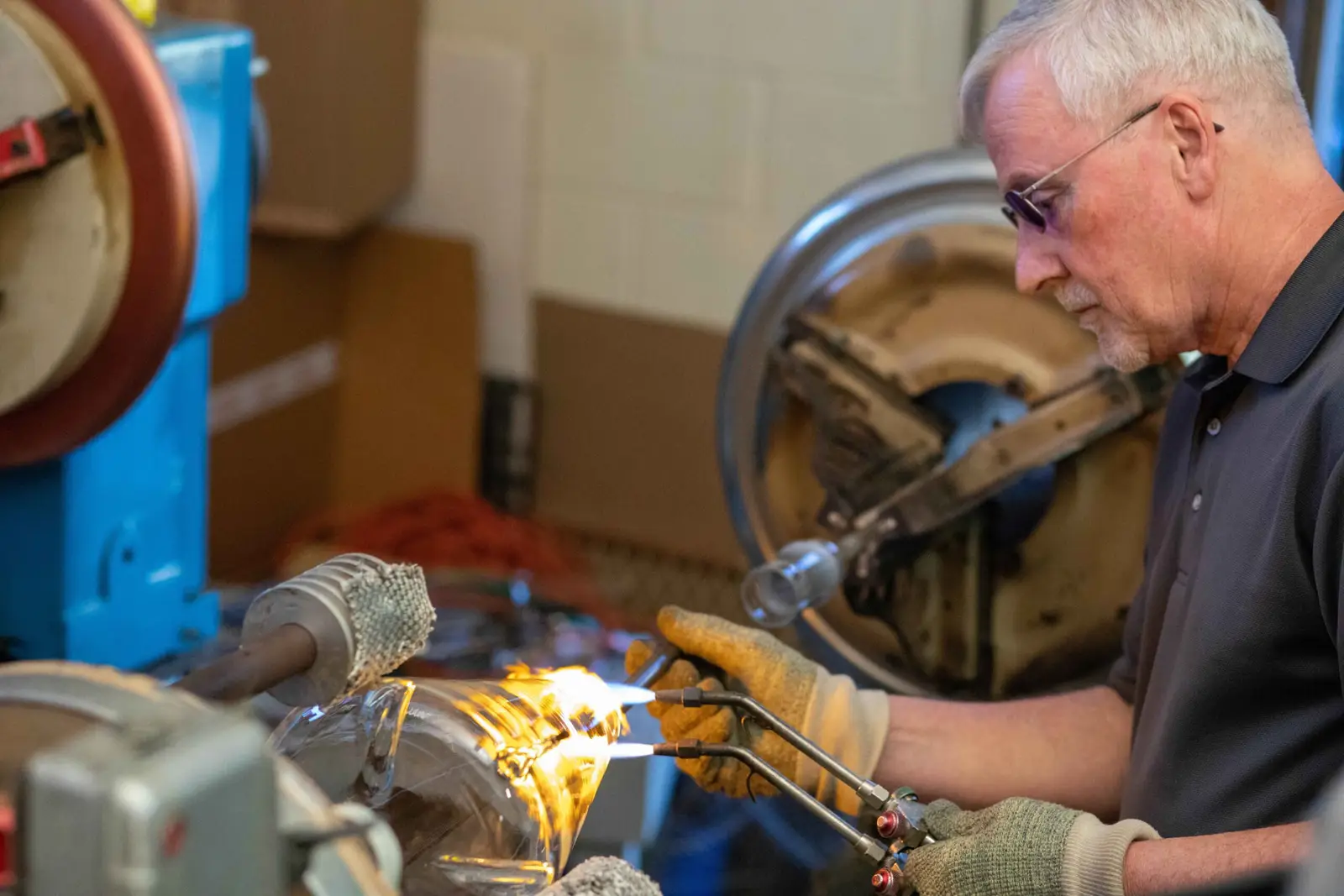
At-Mar Glass brings decades of glassblowing expertise and complete in-house manufacturing to every fritted funnel we produce. From standard catalog items to highly specialized custom configurations, we control every aspect of fabrication at our Kennett Square facility.

Your research often demands glassware that doesn’t exist in standard catalogs. We fabricate custom fritted funnels with specific joint sizes, disc diameters, porosity grades, or capacity requirements tailored to your experimental setup. Whether you need modified stem lengths, specialized angles, or unique ground glass joint configurations, our glassblowers work directly with you to translate procedural requirements into functional designs.

Everything happens under one roof—from initial glass selection through final quality inspection. Our team of experienced glassblowers uses advanced equipment to manufacture, repair, and modify laboratory glassware without outsourcing any fabrication steps. This complete control over the production process ensures consistency, allows rapid design iterations, and eliminates the communication gaps and delays inherent in multi-vendor supply chains.

Each fritted funnel undergoes rigorous inspection for proper disc fusion, uniform porosity distribution, and dimensional accuracy before leaving our facility. We verify joint tolerances, check for stress points or imperfections, and confirm that pore size specifications meet stated grades. This attention to detail ensures you receive glassware that performs reliably and integrates seamlessly with your existing laboratory apparatus.

Laboratory accidents happen—broken glassware shouldn’t halt your research timeline. Depending on repair complexity, we can have your fritted funnels mended and shipped back within a weekend. New orders and custom fabrications receive the same priority treatment, with production schedules designed around your project deadlines rather than arbitrary lead times that ignore the realities of laboratory work.

Precision Filtration Starts Here

Whether you need standard fritted funnels for routine work or custom configurations for specialized applications, At-Mar Glass delivers the quality and turnaround speed your research demands. Contact us today to discuss your specifications, request a quote, or learn how our in-house capabilities can solve your filtration challenges.